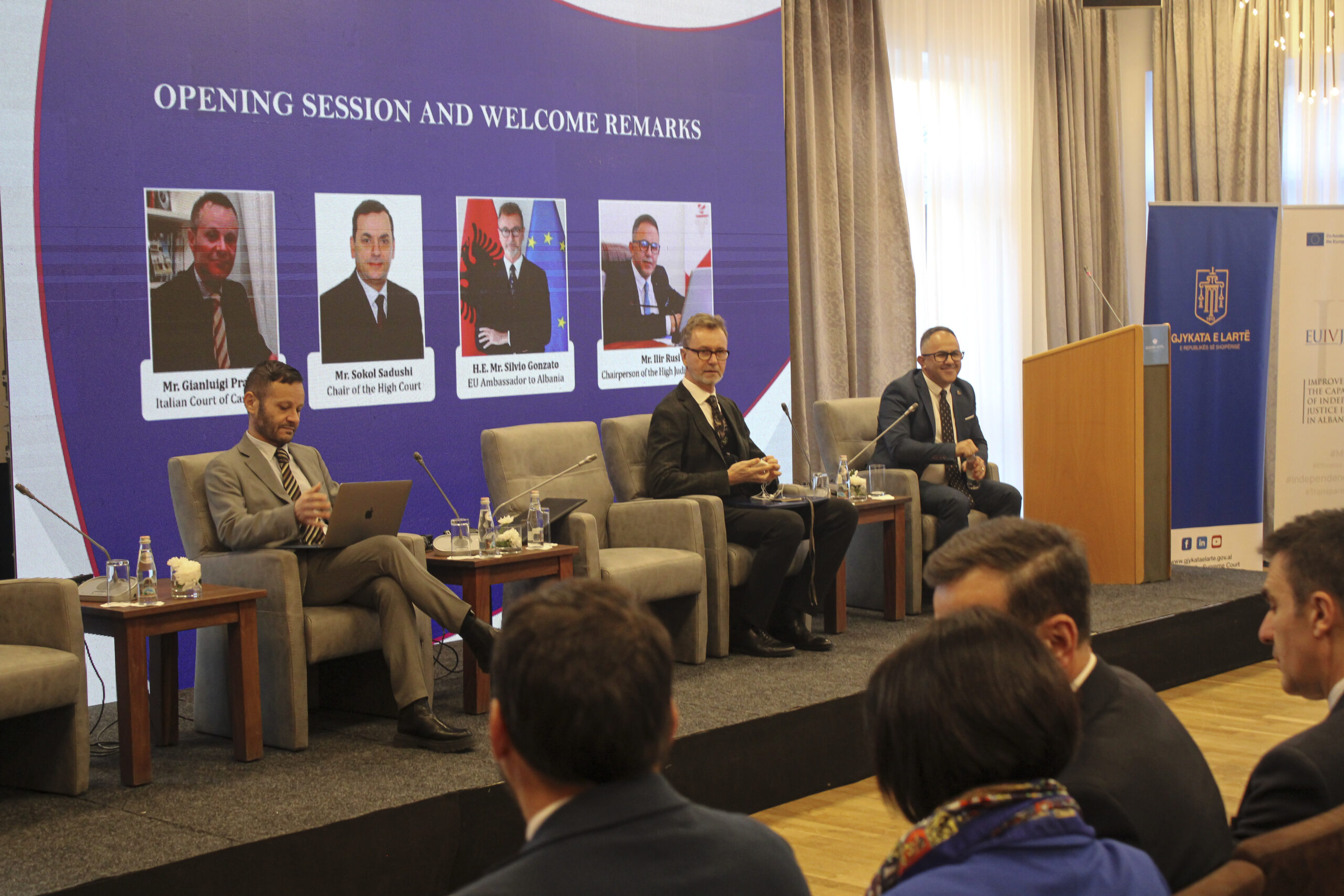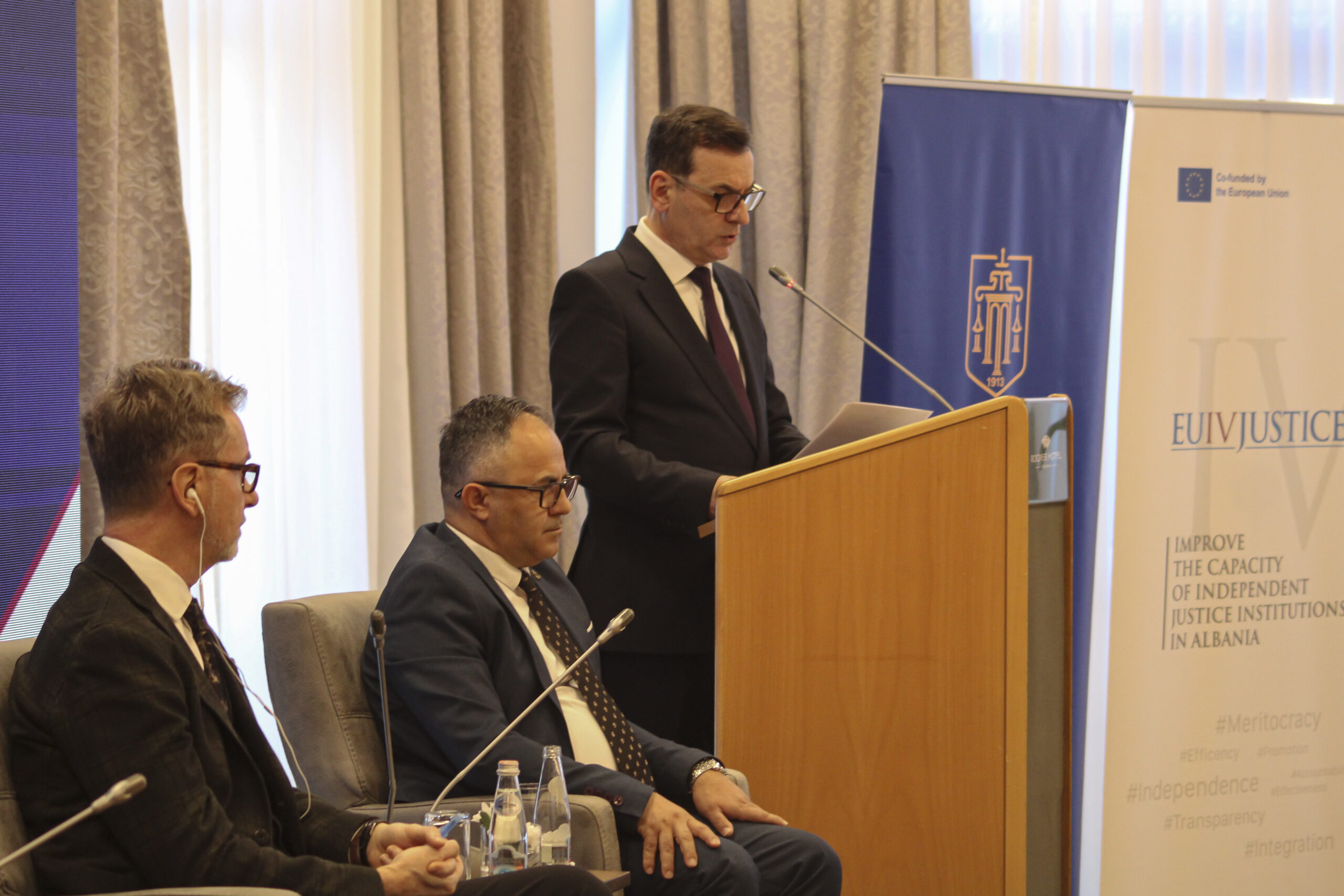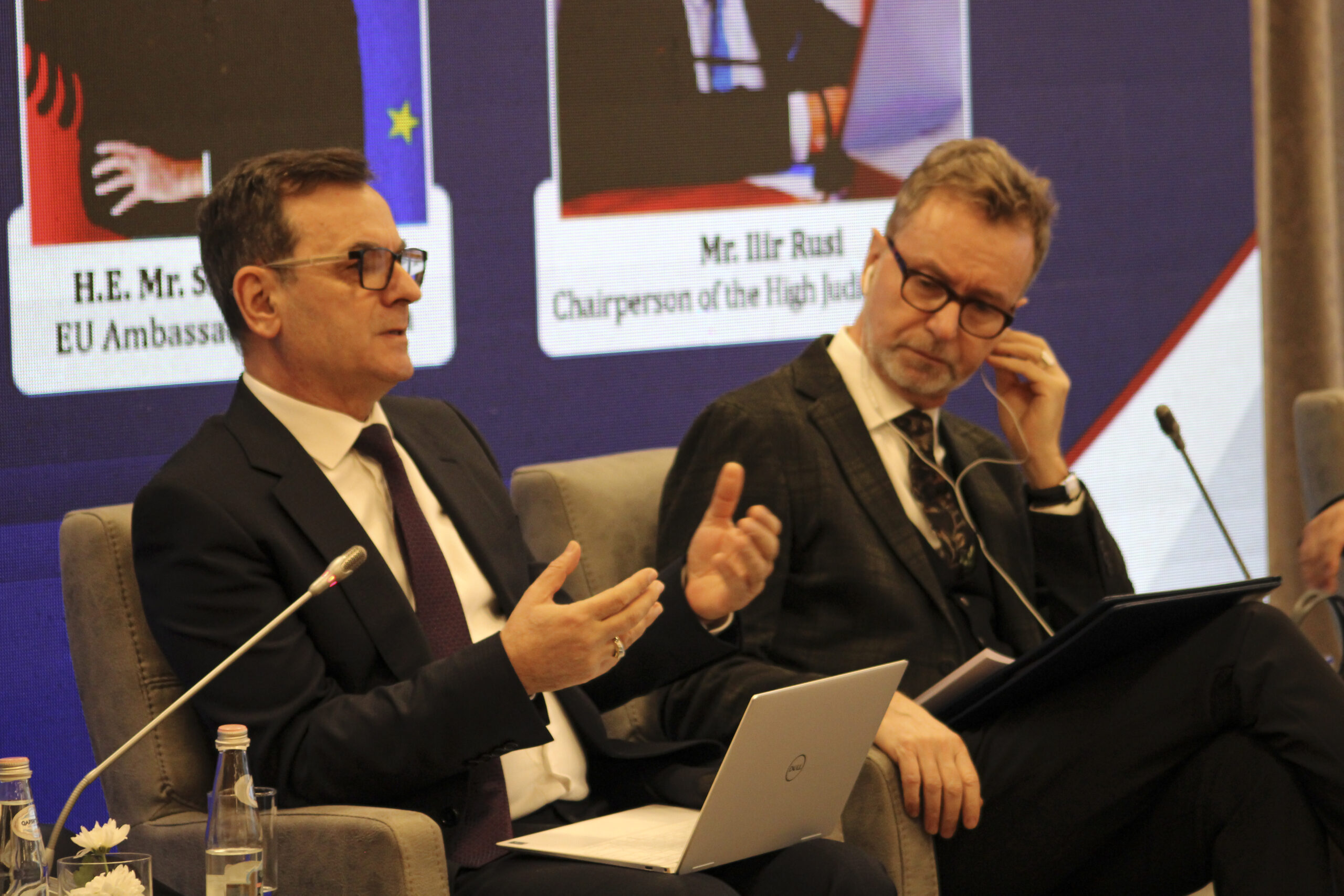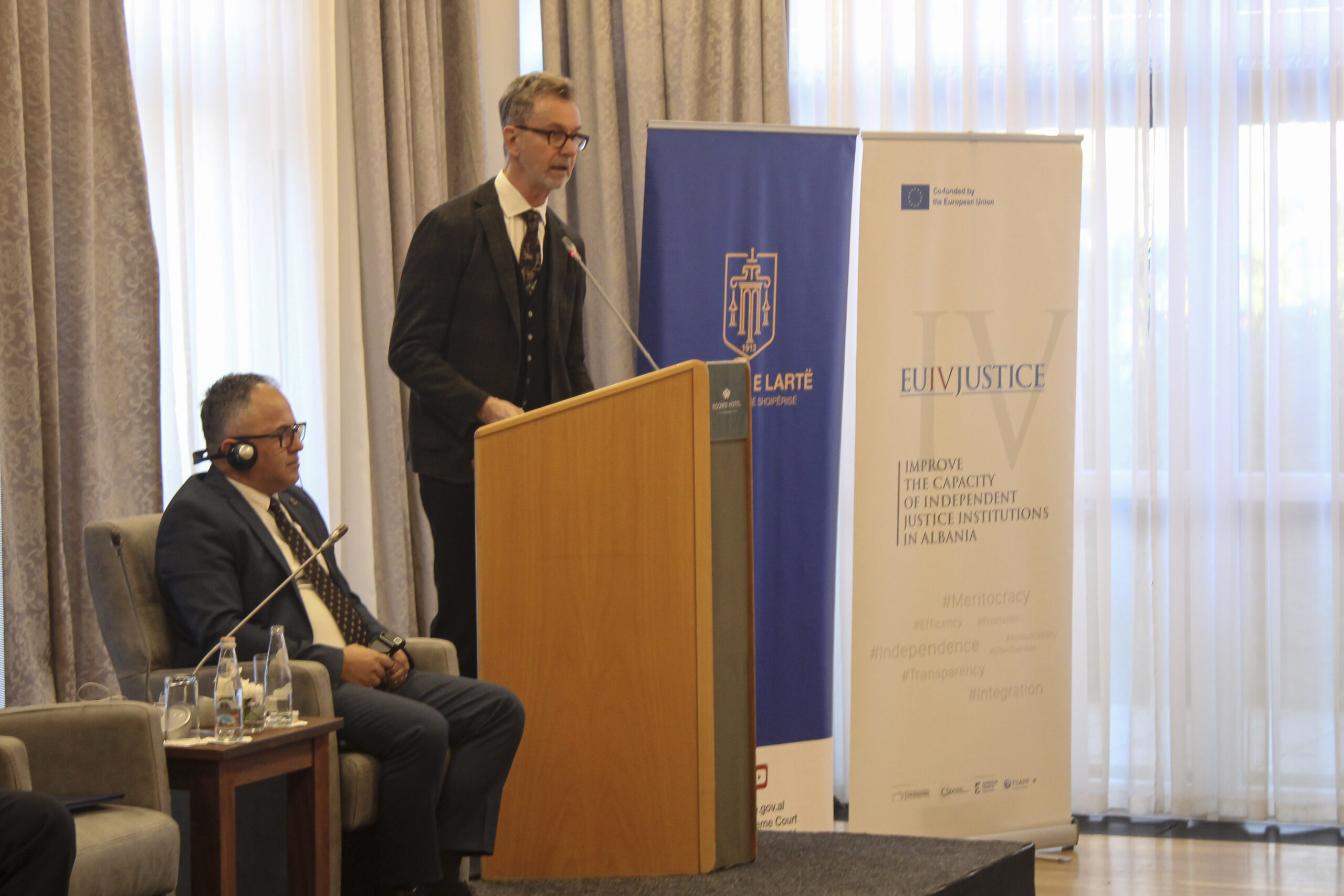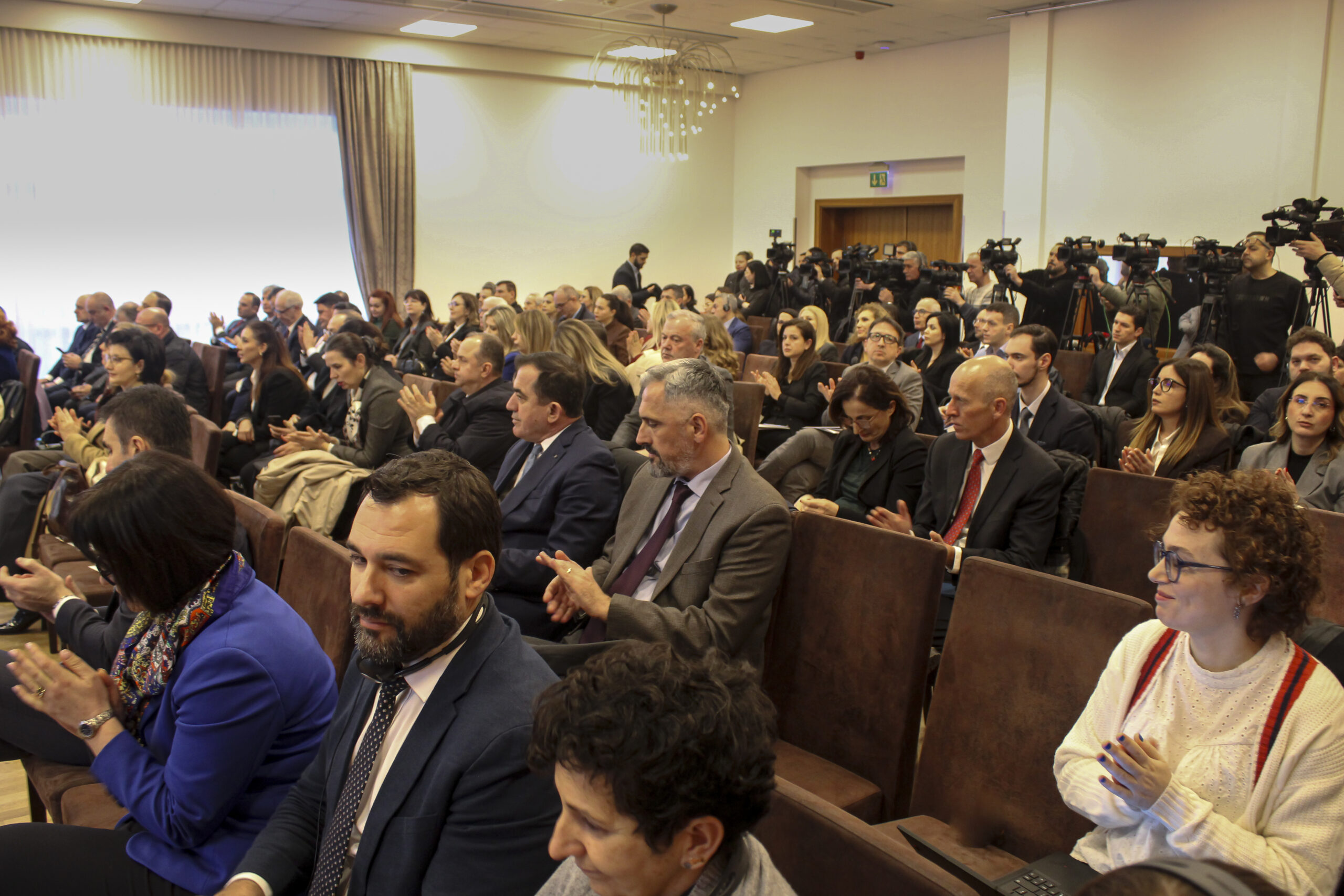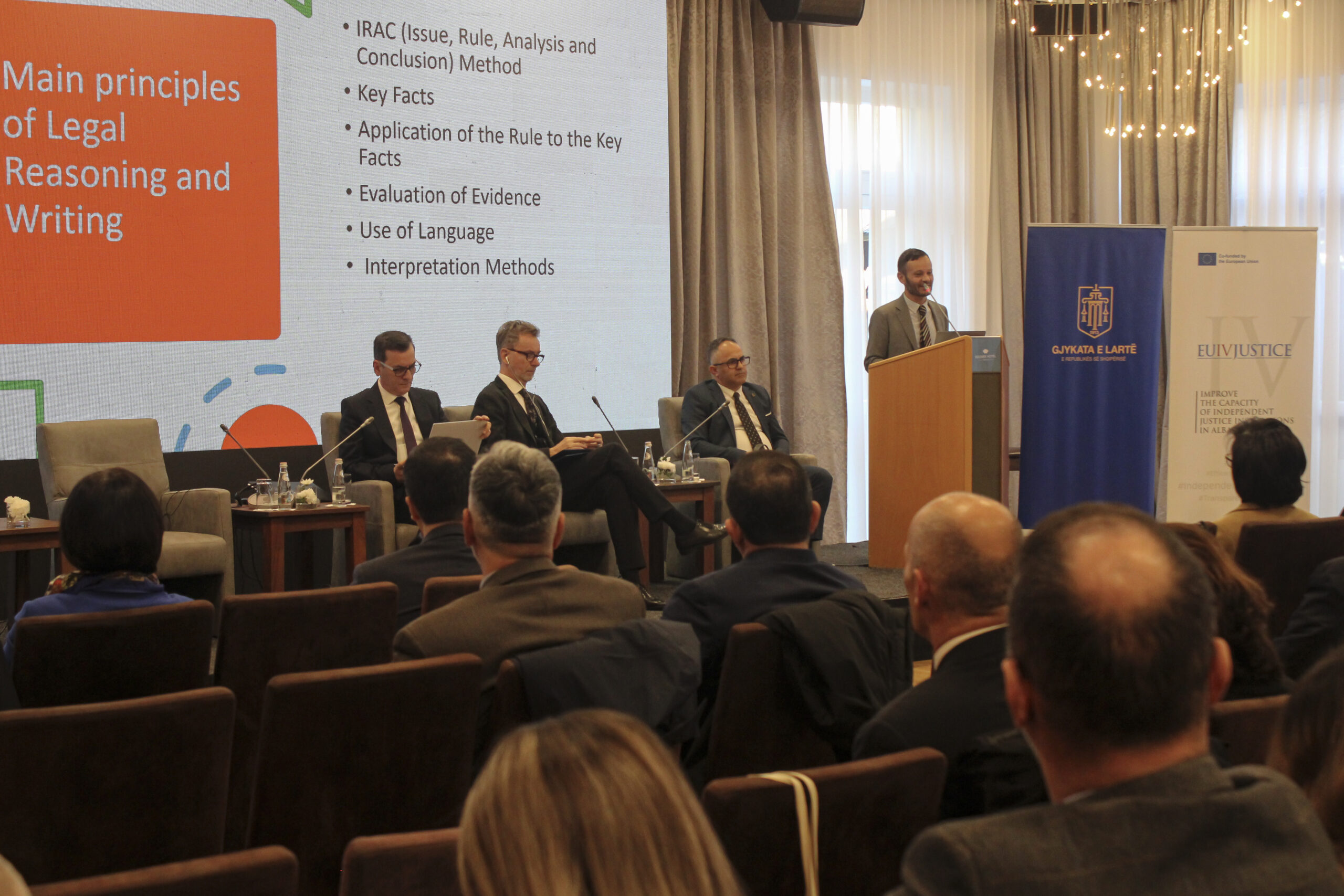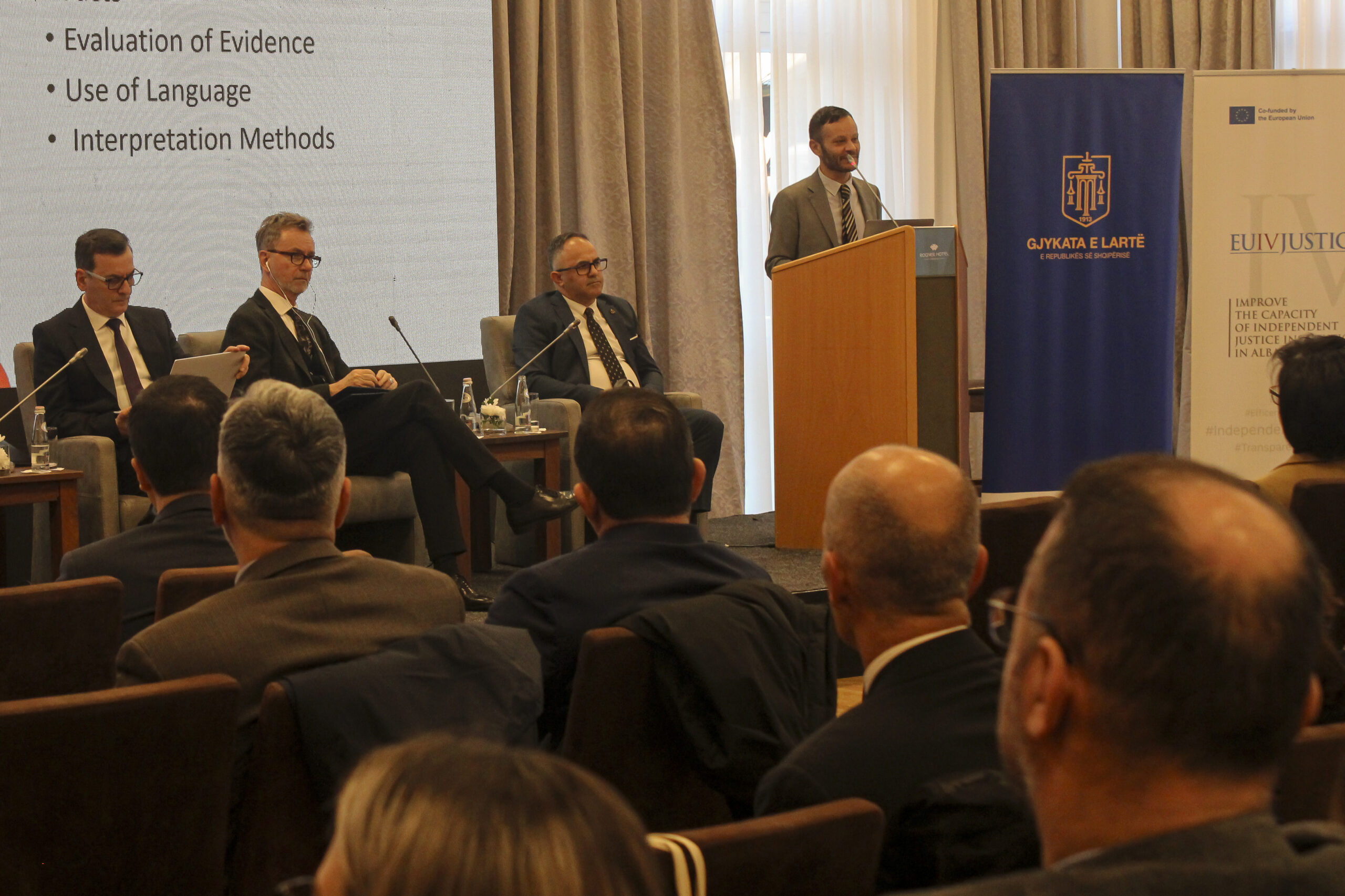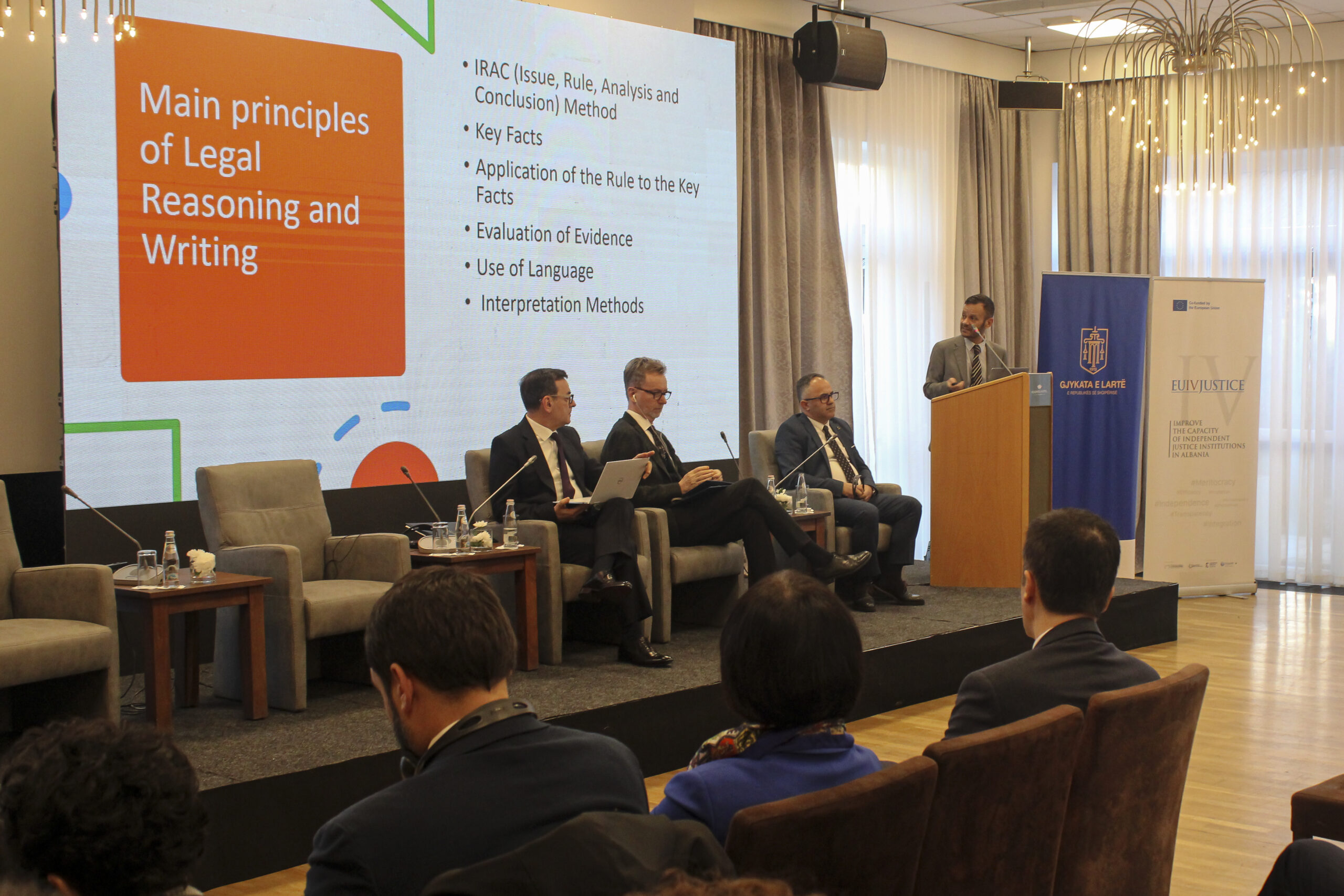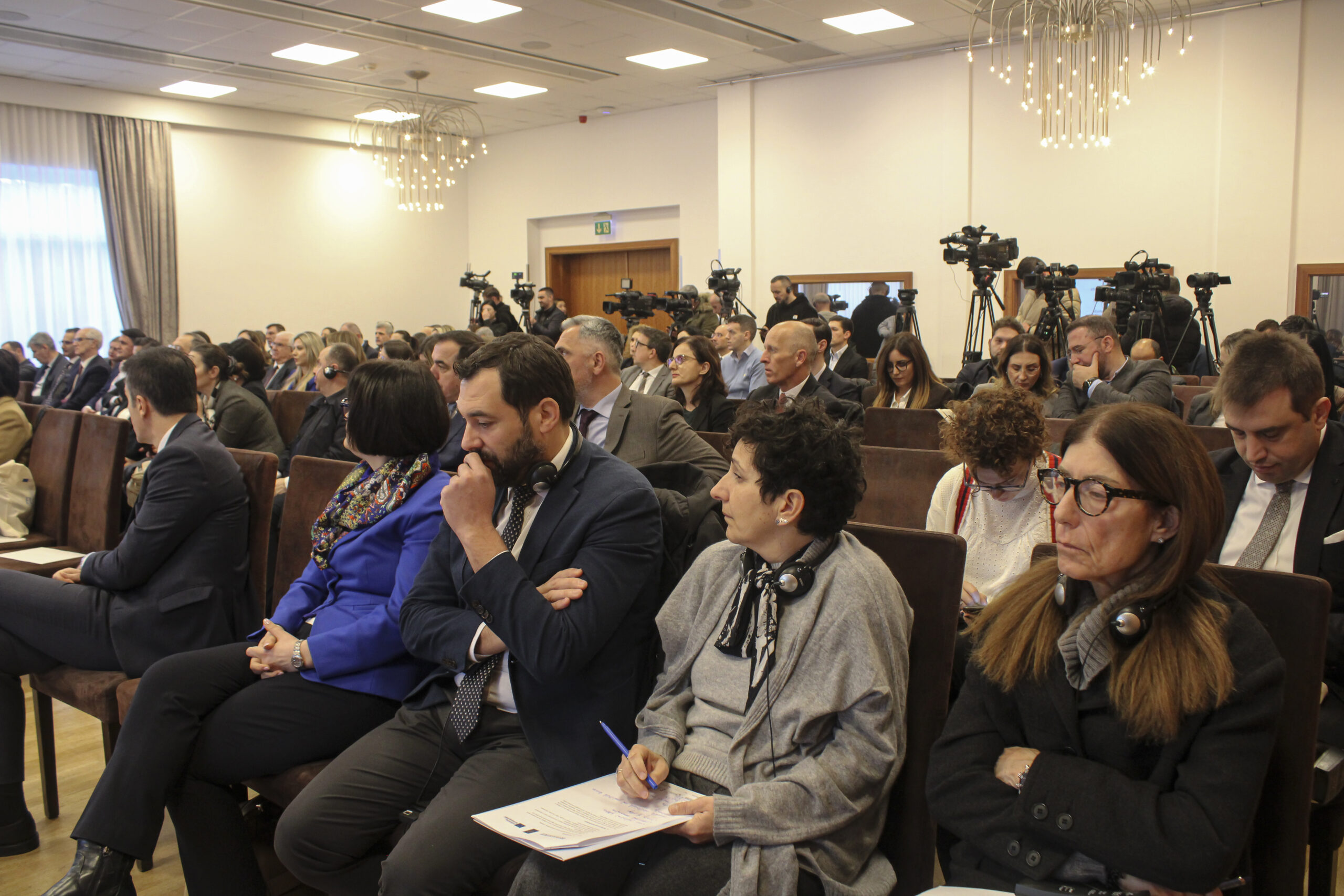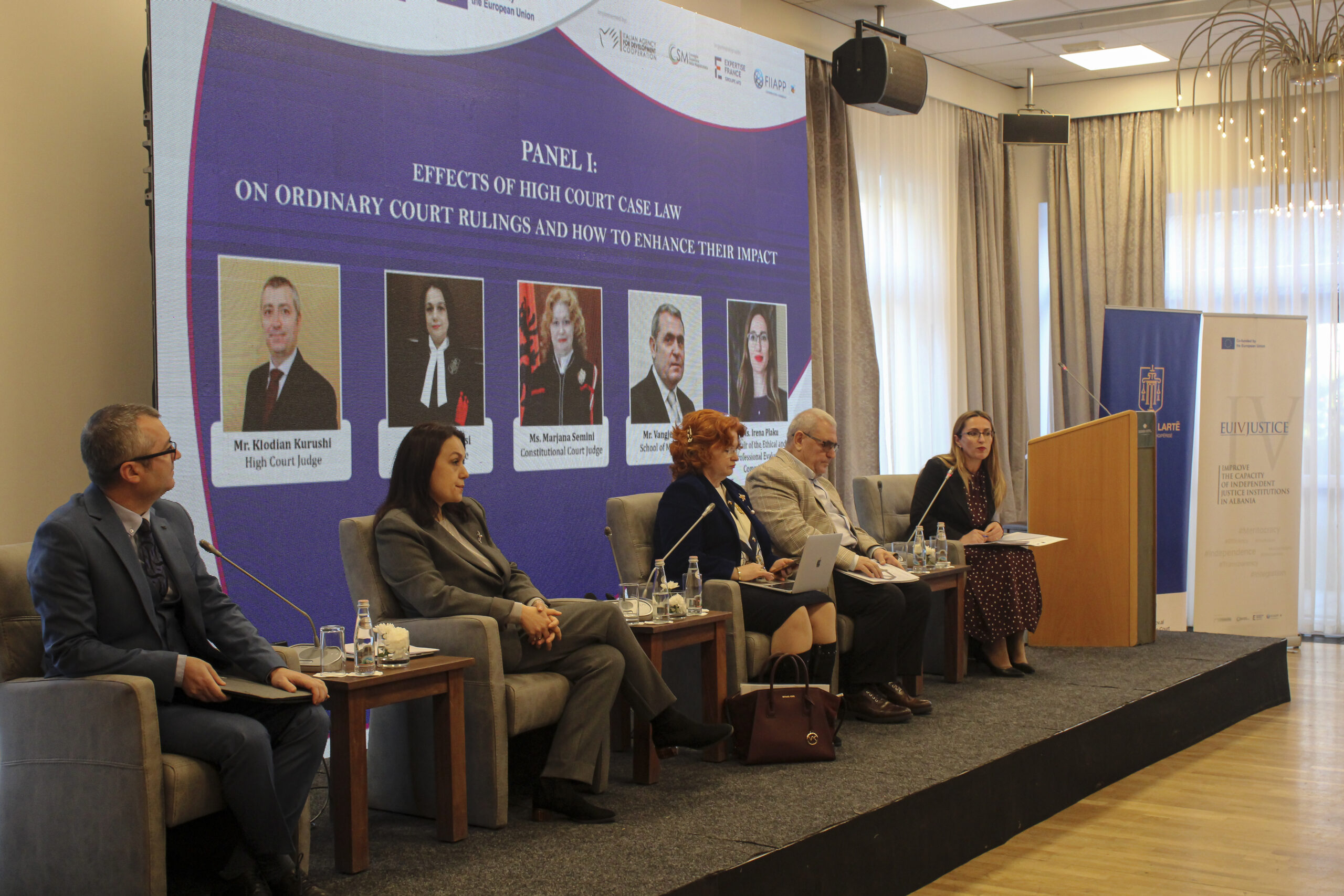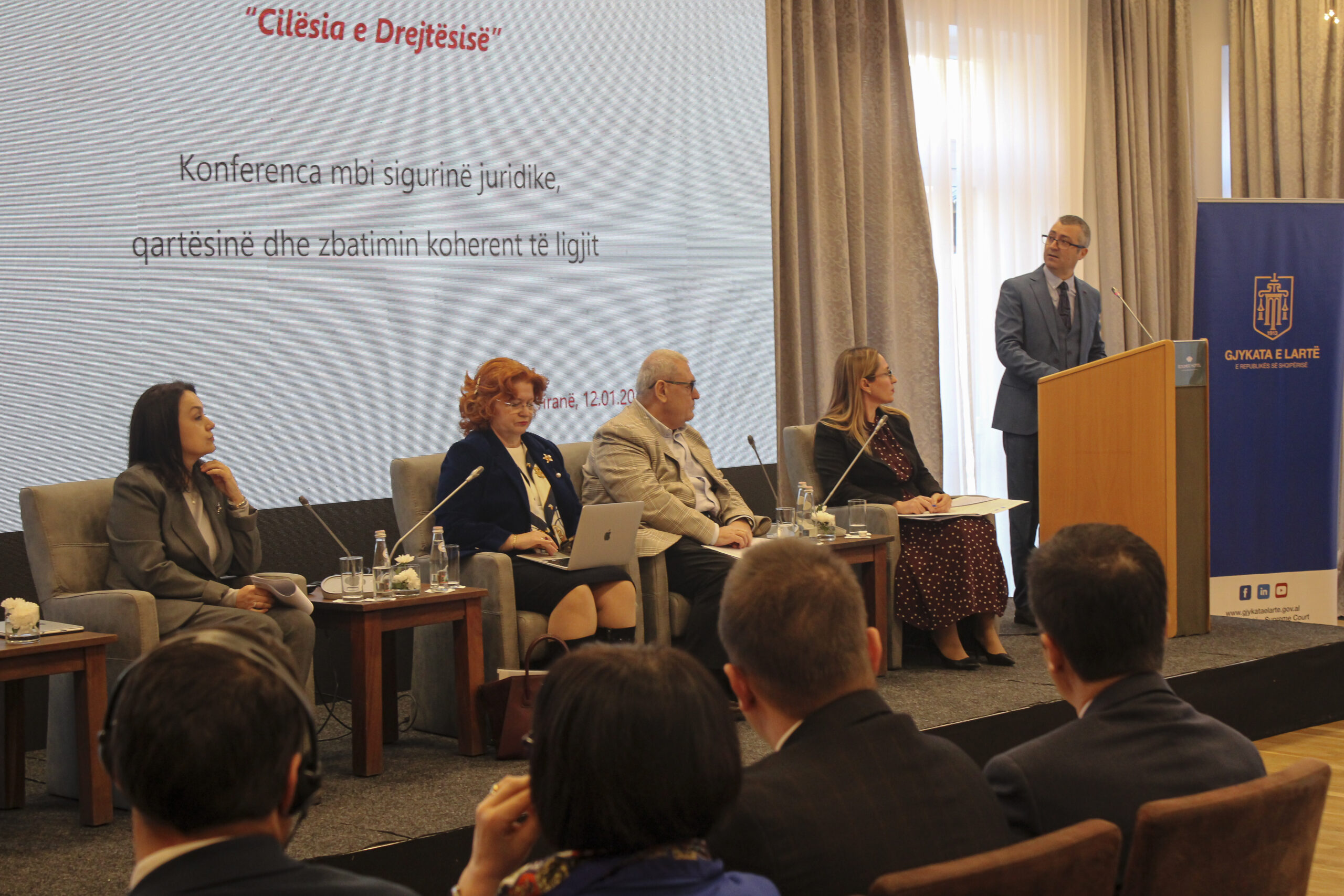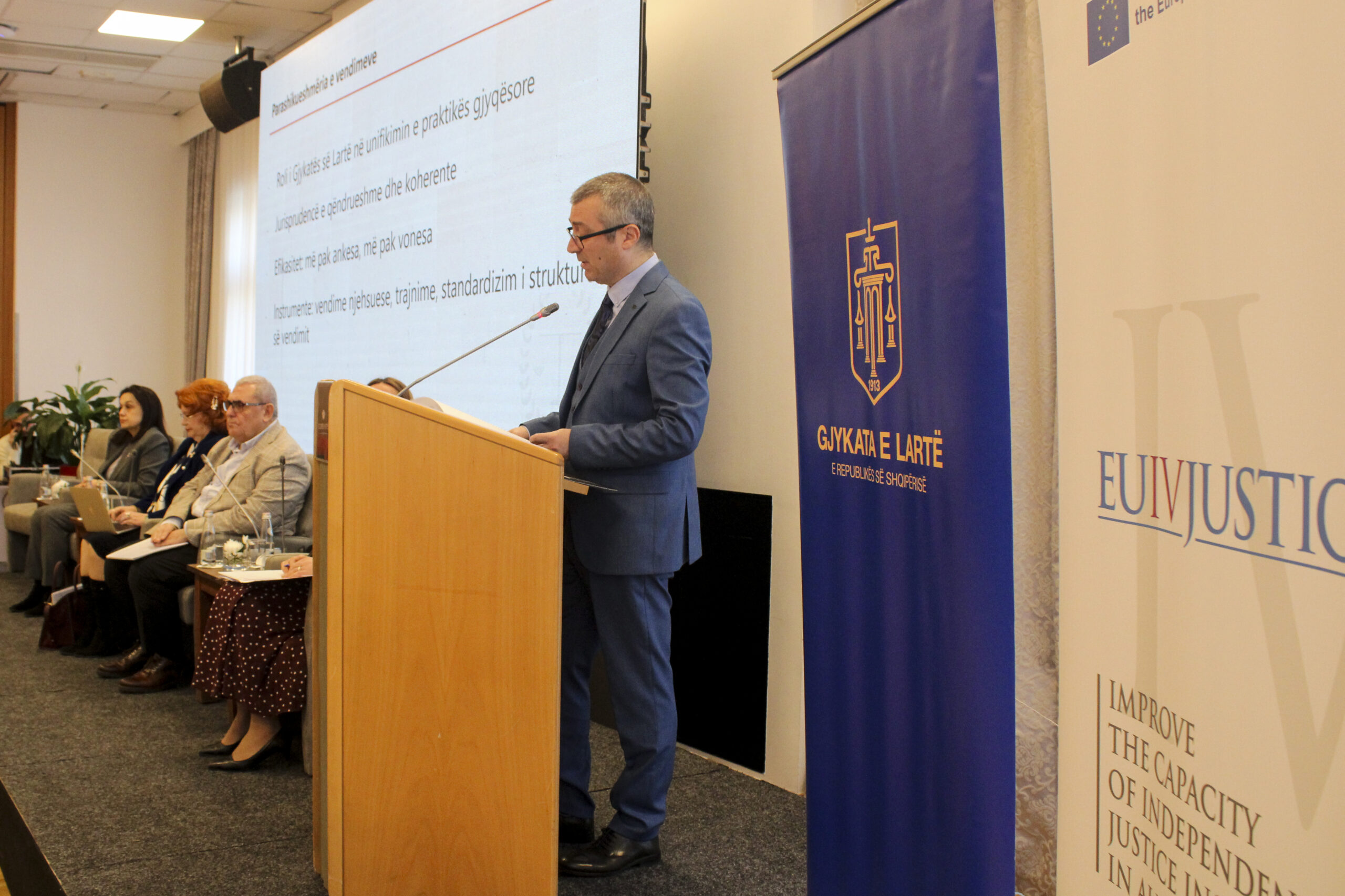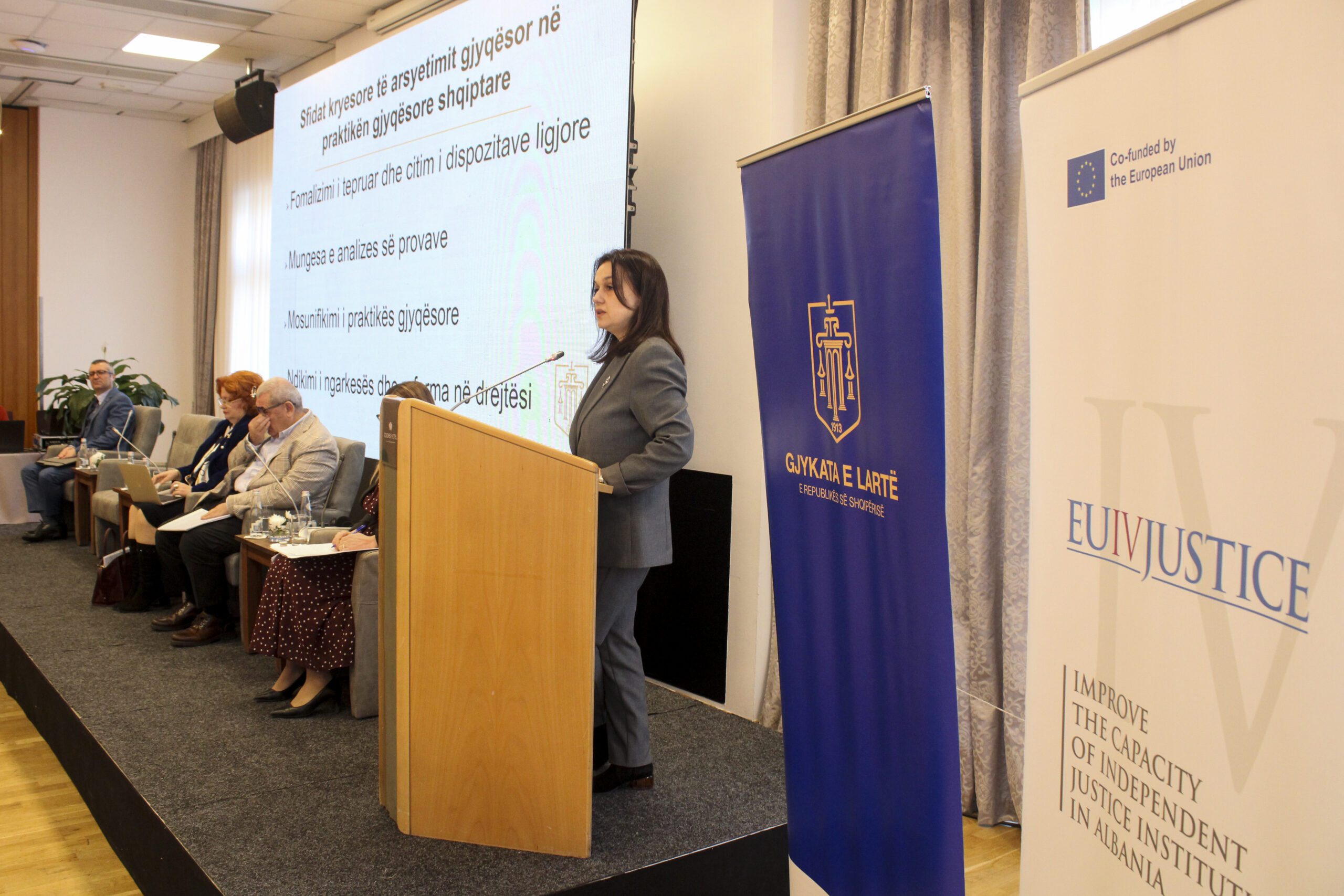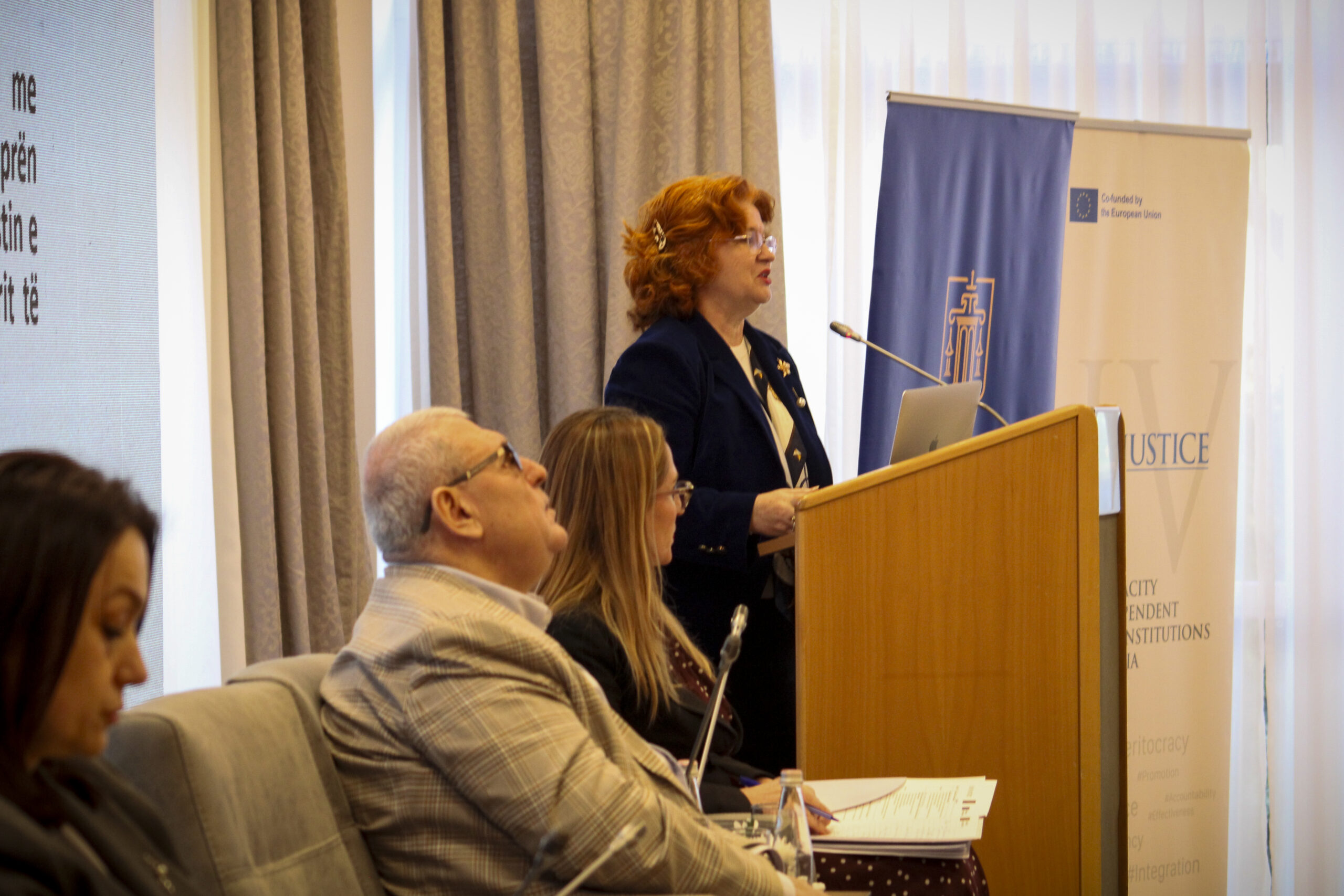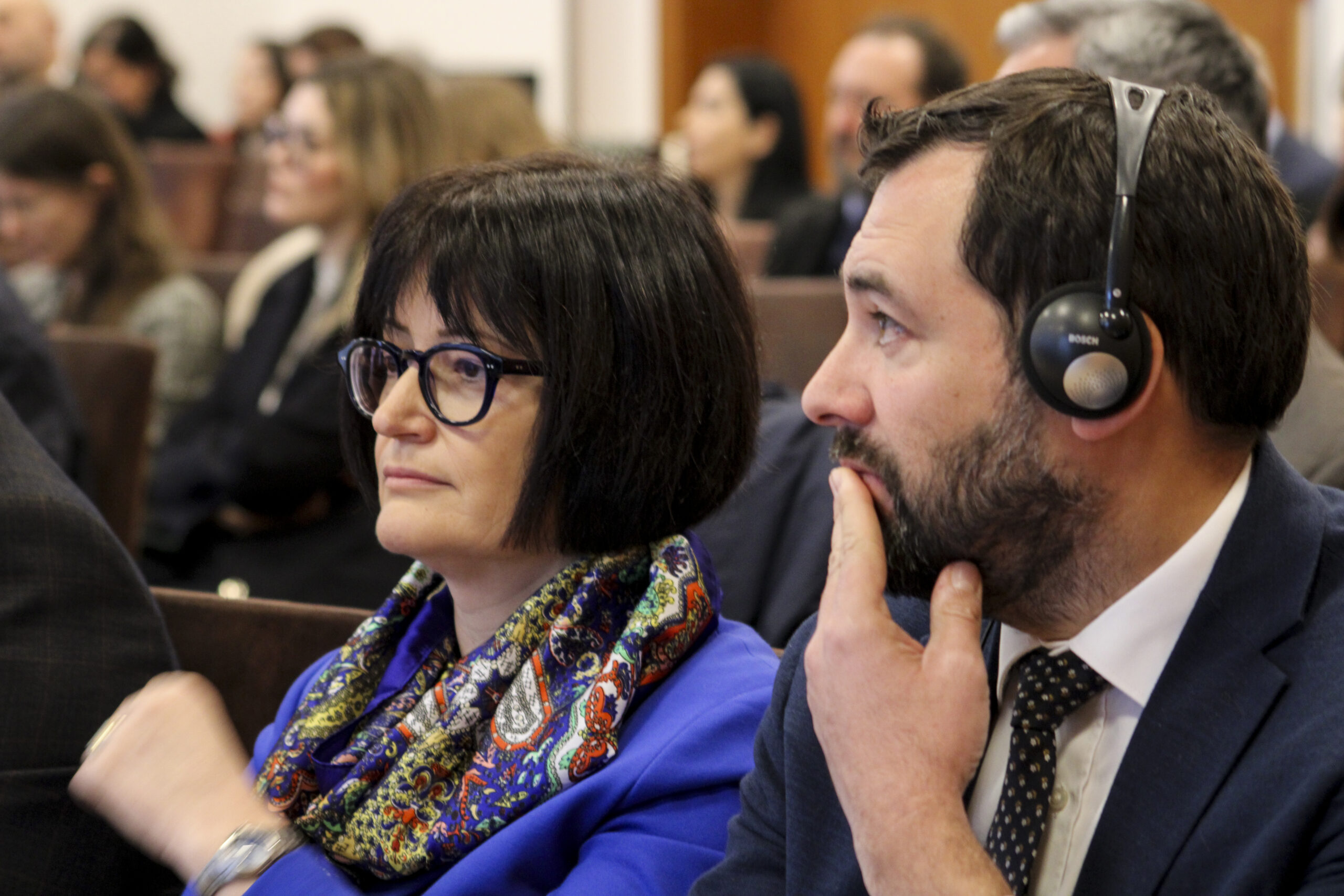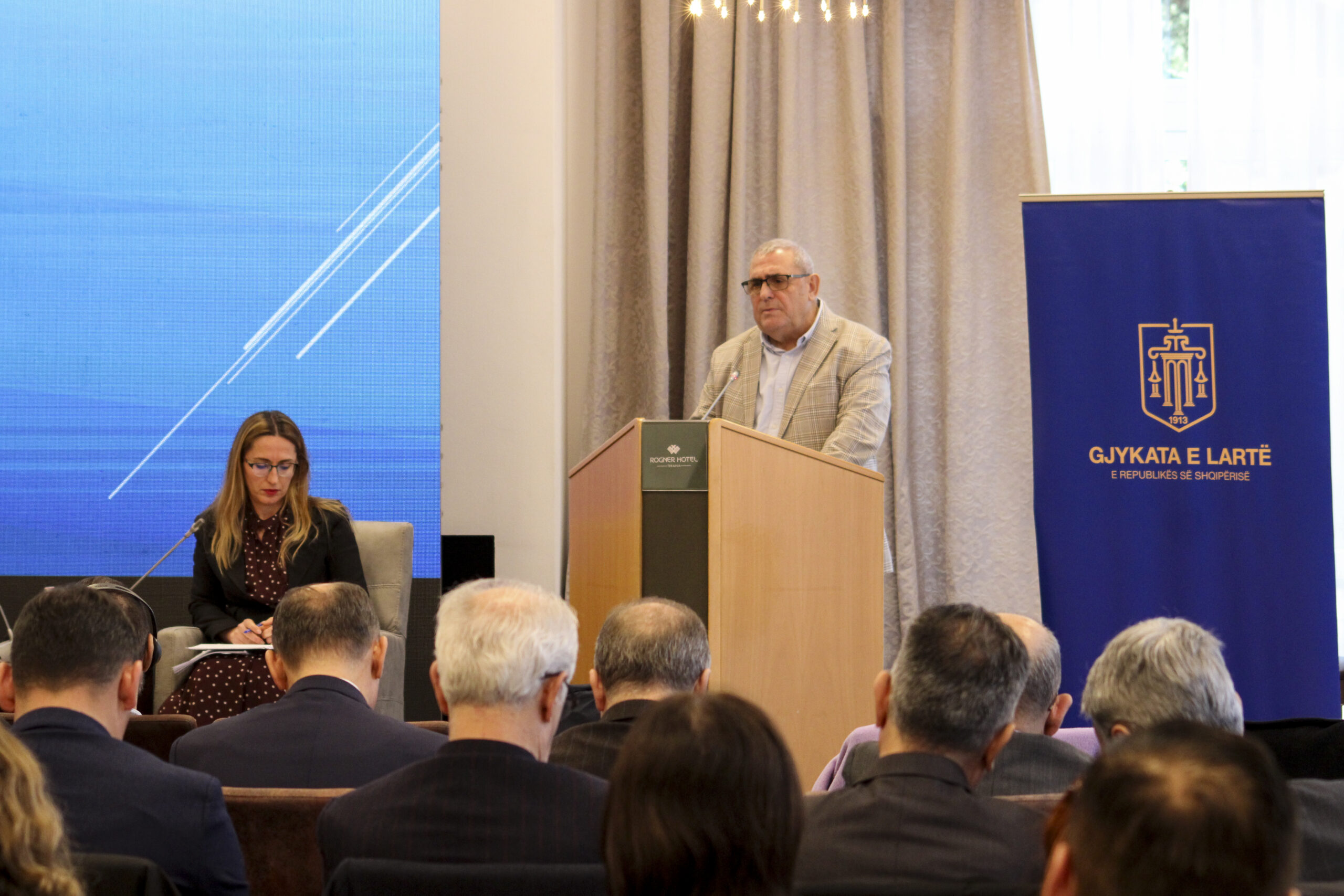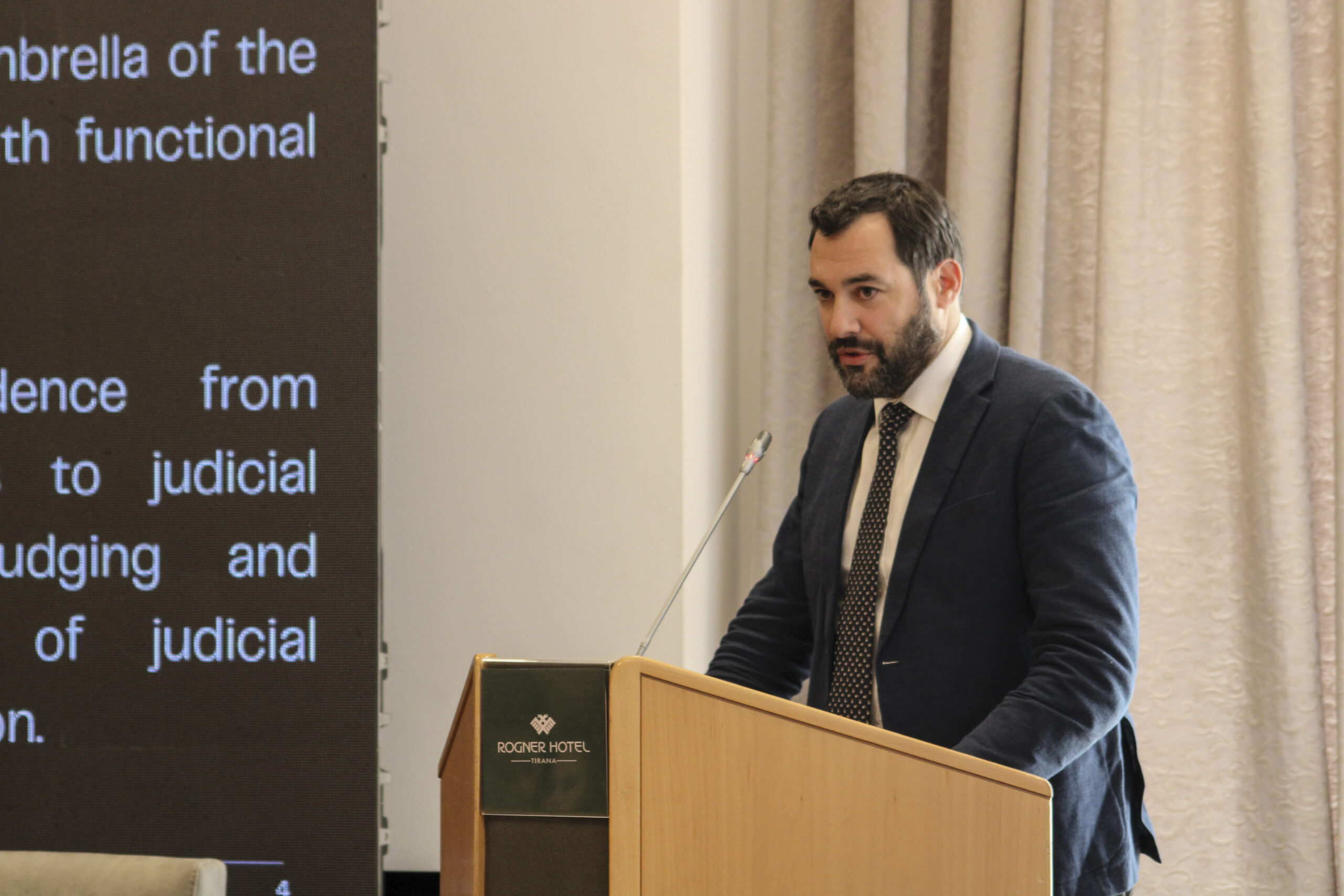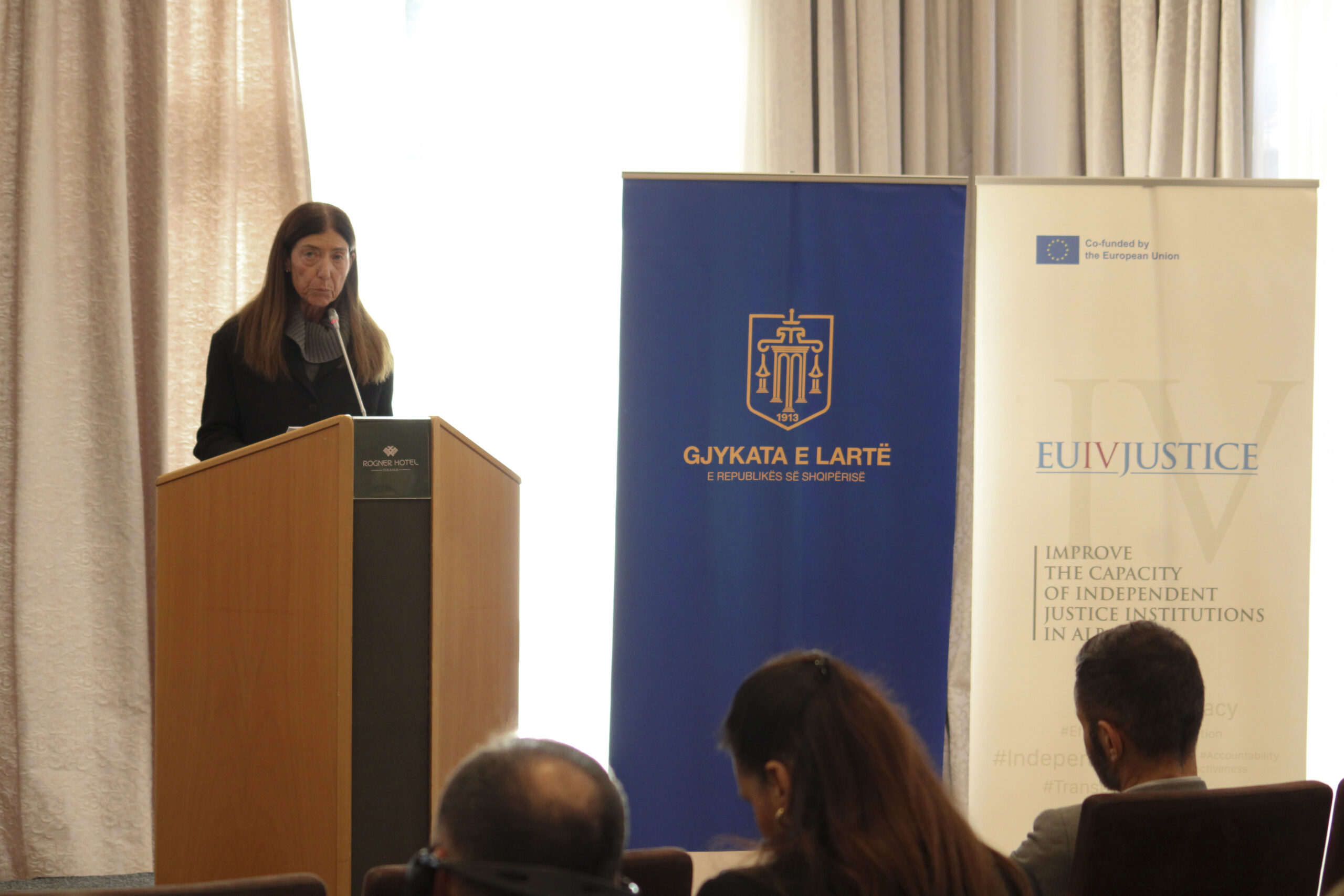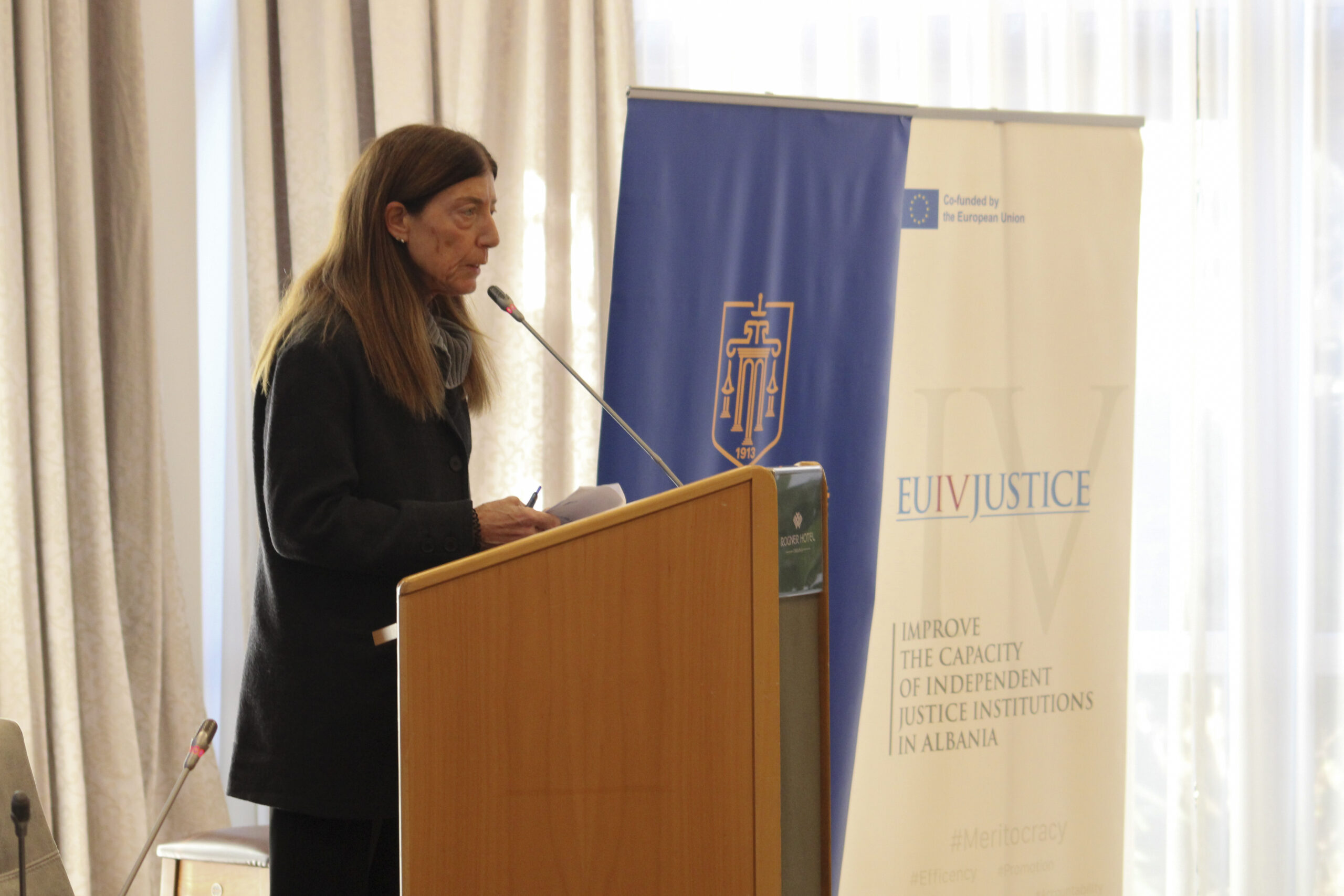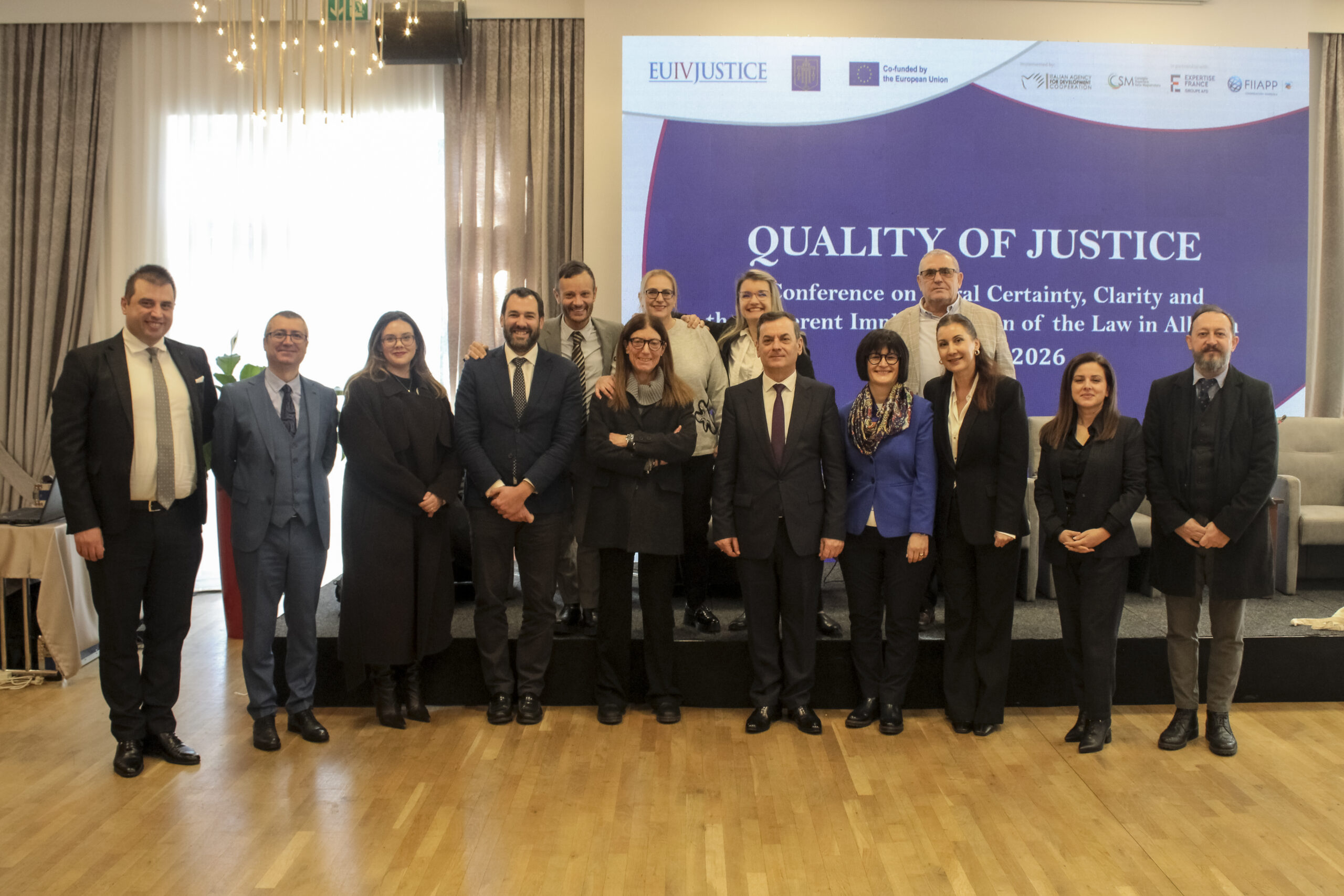

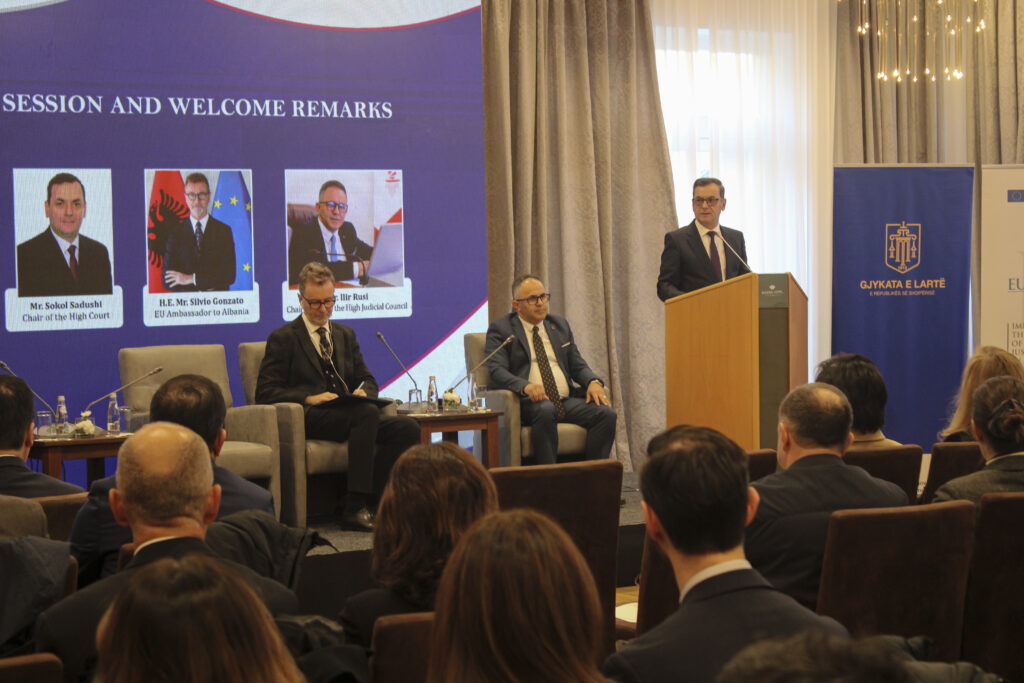
12 January 2026 – Tirana – A high-level conference on “Quality of Justice in Albania”, dedicated to legal certainty, clarity, and the coherent implementation of the law, was held today in Tirana, bringing together senior representatives of Albania’s justice institutions, the European Union Delegation, Italian judicial authorities, legal professionals, civil society, academia and international partners.
The conference was co-organized by the High Court of Albania and the EU4Justice Project, implemented by AICS Tirana as lead partner in partnership with Expertise Frane and FIAP, within the framework of the project “Improve the Capacity of Independent Justice Institutions in Albania (EU4Justice)”. The event gathered representatives of the judiciary, prosecution service, independent justice institutions, civil society, and international partners, reaffirming the importance of coordinated institutional dialogue.
Opening remarks underlined that legal certainty and clarity are fundamental pillars of the rule of law, essential to strengthening public trust in justice institutions and advancing Albania’s European integration path. Speakers highlighted European standards and comparative approaches as key references for reinforcing the quality, predictability, and transparency of justice systems.
H.E. Mr. Silvio Gonzato, EU Ambassador to Albania in his speech said that the Justice is at the heart of the accession process and the conference is essential as it relates to something very tangible for all citizens: the quality and efficiency of justice. It is not easy for Albanian judges to deal with the large and growing number of backlogged cases, while also having to ensure a high quality of justice. This challenge requires decisive actions by both Councils, first and foremost, by increasing the number of judges, backed up by an adequate number of legal advisors and assistants. In addition, as Albania moves toward EU membership, integrating EU law into judicial decision-making is essential and, together with the #EUforJustice project, we will continue to support justice institutions.
The High Court Chair Mr. Sokol Sadushi in his opening remarks underlined that the quality of justice is not measured solely by the speed of the trial or the reduction of the backlog of the case, but above all by the strength of reasoning, clarity, and the predictability of decision-making. The HC Chair also presented the integrated publication of jurisprudence, prepared by the EU4Justice Experts, which aims to make consolidated judicial practice more accessible for judges, prosecutors, lawyers, and the public. Mr. Sadushi closed the speech with a simple standard: the citizens should not have to ‘guess’ justice. They have the right to predict it. This is achieved only when the law is applied without unjustified deviations, is reasoned correctly, and is communicated clearly. The opposite of quality is not simply an error, it is arbitrariness. Let us replace arbitrariness with coherence and turn this into the hallmark of the reliability of justice.
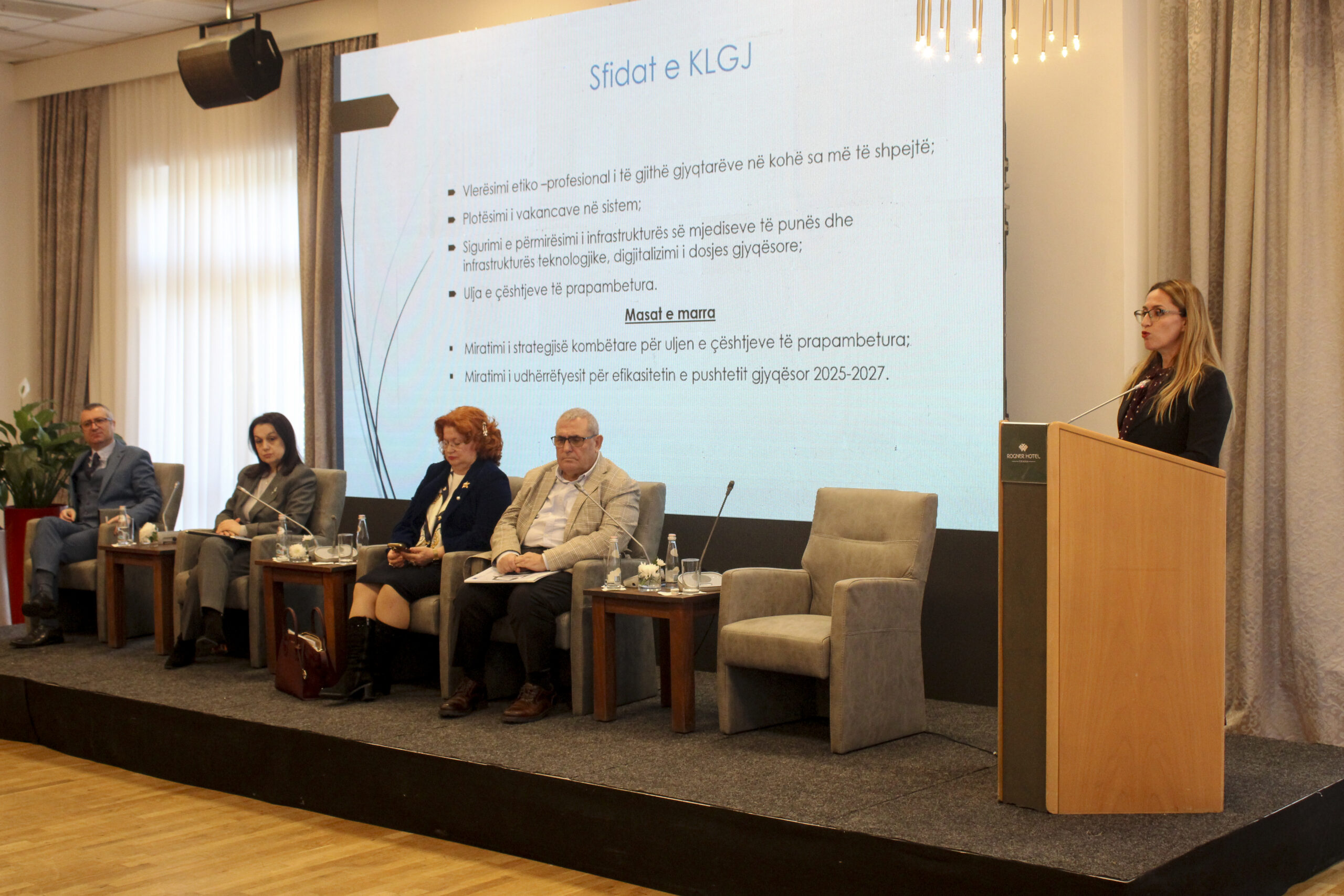
Mr. Ilir Rusi, Chair of the High Judicial Council, highlighted the fact that the role of HC is decisive in unifying judicial practices. Justice sometimes is relative as it should be given on time to avoid additional overlapped problems. He acknowledged that the most problematic issue is the unfilled vacancies and shared the information that the HJC now has created a WG which will assess all the needs to increase the number of magistrates to reduce the backlog in courts. Mr. Rusi made a remark on the lack of physical infrastructure as a requirement by the justice reform which now is in its 3rd phase. HJC will try to improve the working environments for all magistrates in order for them to increase quality in their daily work. The HJC Chair closed his speech by thanking the EU ambassador for his support and the EU4Justice project as well for its support, not only technical but logistical as well.
Mr. Gianluigi Pratola, Deputy Prosector at the Italian Court of Cassation focused his speech on the legal reasoning of the decisions and drafting techniques especially the ones of the High Court, by sharing the models of the Italian Supreme Court and the ways how these models can be applied in the Albanian system, to ensure consistency of jurisprudence and safeguarding legal certainty.
Panel discussions addressed challenges related to fragmented interpretation of legal norms, the need for harmonized practices across institutions, and mechanisms to enhance coherence in judicial decision-making. High-level participants of the judicial panorama emphasized that legal certainty and clarity are crucial to effective justice delivery, accountability, and institutional credibility, as well as to Albania’s alignment with European Union standards. The exchange of experiences reaffirmed the central role of continued inter-institutional cooperation and targeted capacity-building initiatives.
Panel discussions prioritized and discussed the essential role of the High Court’s structured and thematic case law bulletins, as well as their effective accessibility by interested parties.
The conference concluded with key recommendations aimed at strengthening structured dialogue among justice institutions, promoting harmonized practices, and further supporting reforms that contribute to a justice system that is accessible, predictable, and fully aligned with European standards.
EU4JUSTICE is EU Contribution Agreement Project implemented by AICS, Expertise France and FIIAPP. The project’s overall objective is to the improvement of the capacity of the independent justice institutions in Albania.